Tile Roofing and Underlayment Replacement in Arden-Arcade
An older tile roof in Arden-Arcade can still look substantial while the hidden water-control layers need attention. For a home in Arden Park or Sierra Oaks, preserving the established roof profile may be as important as stopping a leak, particularly where tile complements a Spanish or Mediterranean-style exterior. The right decision starts beneath the appearance: underlayment, flashings, deck condition and the feasibility of removing and reusing the tiles. This guide explains lift-and-reset planning, matching limitations and mature-tree maintenance without assuming every estate-style roof is historic or that sound-looking tile proves the whole system is serviceable.
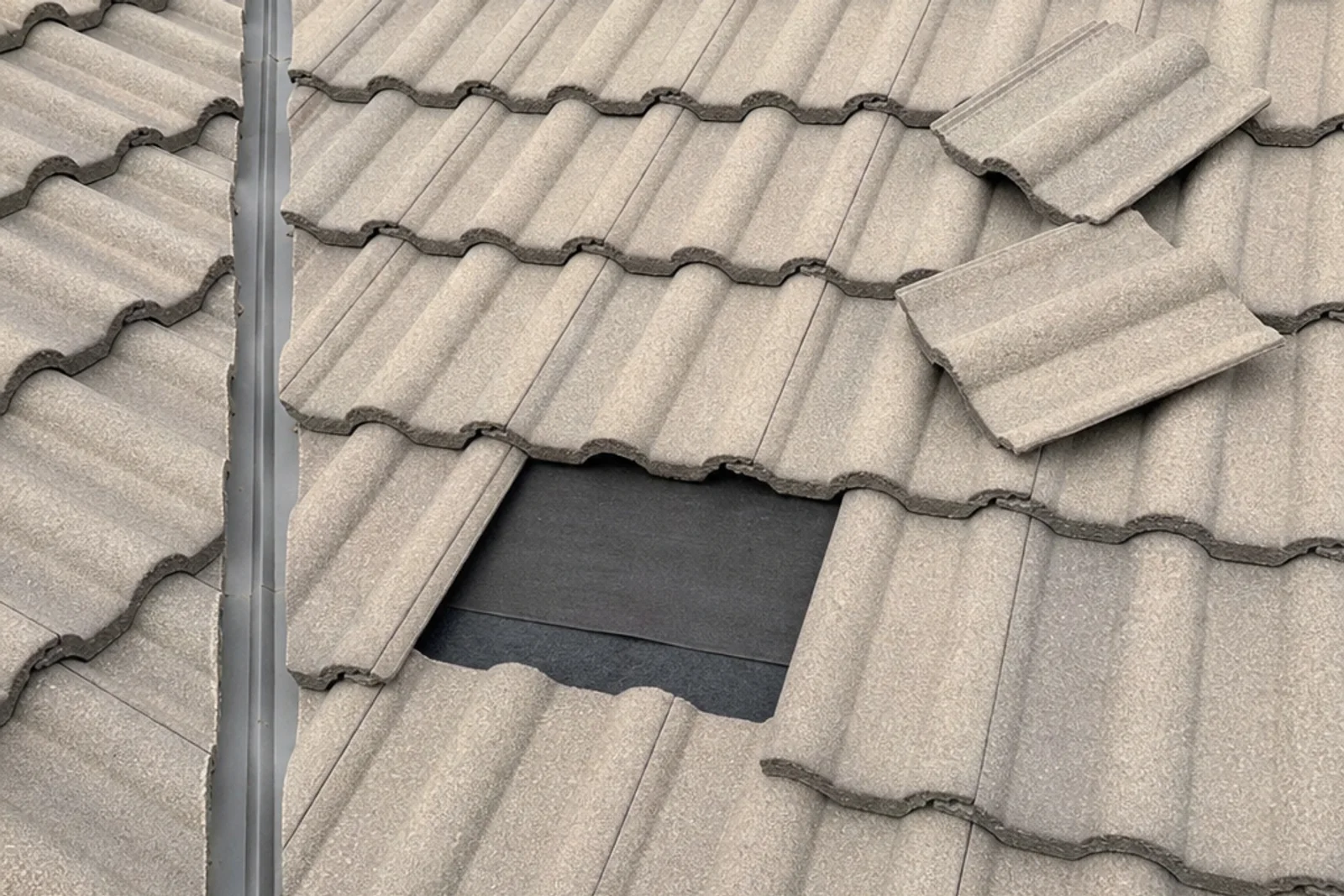
A clay-tile roof can complement an Arden-Arcade Mediterranean-style home.Underlayment condition is part of planning an older tile-roof repair.
Identify the existing clay or concrete profile before planning
Begin with the actual roof rather than a style label. Barrel, S-profile and flatter tiles can differ in material, dimensions, interlock and accessory details. Clay and concrete are not interchangeable simply because their colors are similar. Record any manufacturer markings or spare pieces available without asking the homeowner to walk the roof. Those details can guide matching and determine whether a repair plan is practical.
For an established Arden Park or Sierra Oaks home, examine the roof from the street, garden and visible upper windows. Broad roof planes, hips, ridges and chimneys contribute to the appearance together. A replacement piece with a similar face color can still sit incorrectly or disrupt the profile. Decide whether preserving the existing tile is a condition-based option, an architectural preference or both.
Mature landscaping influences how the work can be inspected and staged. Note tree canopy, narrow side access, planted beds and any pool area near eaves. Do not infer historic designation from age or architectural style. Confirm the property's jurisdiction and any applicable review separately, using Sacramento County's permit resources as a starting point where relevant. The roof plan should preserve desired character without treating appearance as evidence of regulatory status.
Tile sheds much of the rain, while the underlayment and flashing beneath it provide essential water-control details. A roof can therefore leak even when no obvious broken tile is visible from the ground. Aging or damaged underlayment, poorly integrated flashing and water concentrated at a junction can create paths below the covering. The interior stain identifies where water became visible, not necessarily where it entered.
Inspect around chimneys, pipes, valleys and roof-to-wall transitions. A leak after wind-driven rain can behave differently from one that appears during prolonged runoff. Ask about timing, affected rooms and past repairs, then compare those records with attic clues and roof findings. A bead of exposed sealant may temporarily obscure a symptom without restoring the underlying laps or drainage.
The TRI Alliance manual treats concrete and clay tile as assemblies with deck, underlayment, flashing and fastening requirements. Its details show why diagnosis must look beyond tile faces. Professional lifting of a limited area may be needed to assess hidden conditions, with the inspection limits explained beforehand. Do not assume the entire underlayment is sound because one opened area is dry, or prescribe whole-roof replacement solely from the age of a ceiling stain.
Compare lift-and-reset with full replacement using condition
Lift-and-reset means removing usable tile, renewing the agreed underlying system and reinstalling suitable pieces. It can preserve a roof's established appearance when tile condition and handling risk support reuse. It is not merely sliding fresh underlayment beneath a few courses, and it does not guarantee that every existing piece will survive removal. Evaluate weathering, cracks, attachment and availability of compatible replacements.
A full replacement may be more appropriate when substantial tile deterioration, widespread breakage, incompatible prior repairs or unavailable matching pieces make reuse impractical. It also needs a deck and load review for the chosen system. Do not assume that changing tile material or profile leaves structural and fastening requirements unchanged. The comparison should include the same underlayment, flashing and deck findings wherever applicable.
Ask for a breakage and replacement plan rather than a promise of perfect salvage. Identify where saved tiles will be stored, how suitability will be assessed and what happens if concealed damage expands the scope. The estimate should distinguish known repairs from provisional quantities. Compare the labor of handling and sorting old tile with the complete replacement proposal; material reuse does not automatically mean a lower total price or a longer remaining service life.
Detail hips, chimneys and roof-to-wall junctions carefully
A large roof with several wings can concentrate water at a valley or against an upper wall. Trace each water path from ridge to discharge, including changes created by additions. Underlayment must connect coherently with flashings beneath the tile. Replacing the field covering while leaving a deficient junction unchanged can preserve the same leak path under a fresh-looking roof.
Hips and ridges need compatible pieces and attachment, while chimneys and walls need appropriate flashing and counterflashing arrangements. The selected tile profile influences how those details fit. Pipe flashings also need to account for the layers below and above the covering. The TRI Alliance manual provides installation details, but the chosen product, applicable edition and local approval determine the final specification for the property.
Preserving appearance should not mean preserving failed details. Ask which flashings will be replaced, which retained elements need exposure and how visible accessory colors will relate to the existing roof. If matching ridge or hip pieces are unavailable, discuss the visual consequence before proceeding. Do not call an ordinary older roof a historic restoration or imply special preservation expertise without documented status and a confirmed scope.
Keep mature-tree debris out of tile drainage paths
Leaves and small branches can collect in valleys, behind chimneys and along shaded eaves. Debris may slow runoff, hold moisture and conceal broken tile or displaced flashing. Mature trees are part of many established properties, but maintenance frequency should follow the actual canopy and roof geometry. An open front slope does not prove a concealed rear valley is clear.
From the ground, watch for gutter overflow, staining below a junction and persistent debris pockets. Arrange professional checks before wet weather and after substantial leaf fall, storms or tree work. Nearby branch removal can change debris patterns or leave material on the roof. Record those events in the maintenance file so later leakage can be investigated with useful context rather than guessed from one photograph.
Tile can break under poorly placed foot traffic, and a broken piece may not become apparent immediately. Owners should not walk the roof to clean it or inspect a stain. Cleaning methods need to suit the tile and underlying assembly; aggressive pressure washing can disturb pieces or drive water where it should not go. Ask about safe access, careful debris removal and whether gutter accessories can be inspected without damaging the covering.
Agree on landscape, pool and staging protection
Tile handling requires space for removed material, saved pieces and new components. Walk the staging plan with the owner before work. Identify planted beds, irrigation lines, delicate paving, patios and pool equipment. Discuss delivery routes and load placement; a convenient open surface may not be suitable for concentrated material weight. The agreed arrangement should reflect the actual property, not a standard assumption about estate-sized lots.
Where a pool is near the work area, discuss debris containment and access restrictions with the owner, including any coordination needed with the pool professional. Do not assume an ordinary pool cover can support roofing loads or falling material. Determine how outdoor areas will be protected and when they can reopen. These are site-specific practices to confirm in the scope, not an unconditional promise that no debris or disruption can occur.
Document the home's existing exterior condition and agree on communication for deliveries, weather and concealed repairs. Saved tile needs organized storage so its condition and matching role remain clear. Ask how cleanup will address fragments as well as fasteners, especially around planted beds. Final review should compare completed details with the agreed scope and note follow-up items rather than treating the last visible tile as the end of documentation.
Build a tile-repair decision file before authorizing work
Collect leak history, safe photographs, prior invoices, spare-tile information and any available roof plans. A focused inspection can then separate localized detail repair from broader underlayment renewal or full replacement. A representative decision might retain sound field tile while renewing failing hidden layers, but that is a planning possibility, not a reported Titan job or a promise that your roof qualifies.
Compare proposals using the same included slopes, tile-reuse assumptions, underlayment system, flashings, deck repairs and handling arrangements. Ask how replacement pieces will be sourced and what visual mismatch remains possible. If estimates differ sharply, find the scope difference before interpreting the price. Access, roof complexity, salvage labor and hidden damage can influence cost even when the visible roof area is unchanged.
Keep permit and inspection records, product identification, photographs, approved changes and actual written warranty terms. Do not assume a warranty merely because a material is long-lasting or a contractor calls the work a restoration. Preserve compatible spare tiles when feasible and record where they are stored. Bring these questions to a free inspection so condition, appearance and protection arrangements can be evaluated together before you choose a repair pathway.
Can my Arden Park tile be reused when underlayment fails?
Often it can be evaluated for reuse, but condition and handling risk determine feasibility. Inspect cracking, deterioration, attachments and the availability of compatible replacements. A lift-and-reset scope should describe sorting, storage, breakage allowance and renewal of underlayment and flashings. Sound-looking tile does not guarantee complete salvage, and reuse should not be promised before the roof and matching options are assessed.
How can a Sierra Oaks roof leak when the tiles look intact?
Water can reach failing underlayment or flashing beneath apparently intact tile, especially around valleys, chimneys, pipes and wall junctions. Debris or concentrated runoff can add to the problem. Trace the leak using timing, attic clues and roof inspection rather than assuming the ceiling stain marks the entry point. Limited professional lifting may be needed to investigate hidden layers and establish repair limits.
Can you match an older Spanish or Mediterranean tile profile?
Matching depends on identifying the material, manufacturer, dimensions and interlock, then checking actual availability. Similar color alone does not establish compatibility. Weathering can also make a new piece visibly different. Use markings, spare pieces and professional inspection to guide sourcing. Discuss unavailable accessories and remaining appearance differences before authorizing repair rather than accepting a promise of an exact match.
How do mature trees affect tile valleys and drainage?
Leaves and branches can obstruct valleys, hold moisture and hide damaged details. Arrange inspection before wet weather and after significant debris events, with frequency based on the actual canopy. Watch for overflow from the ground and avoid walking on tile. Safe cleaning should follow appropriate product guidance; aggressive pressure washing or careless foot traffic can create new problems while trying to remove debris.
Does lift-and-reset cost less than full replacement?
Not necessarily. Reuse saves some new tile but adds removal, sorting, storage and reinstallation labor, with breakage and matching uncertainties. Both options may need underlayment, flashing and deck work. Compare equivalent written scopes based on condition, access and roof complexity. Avoid treating material reuse as a guaranteed saving or selecting the lower total before identifying what each estimate includes.
How will landscaping and pools be protected during tile work?
Protection should be agreed for the actual site before work. Review delivery and debris routes, material loads, planted beds, irrigation, paving and pool access. Discuss containment and any pool-professional coordination, without assuming a cover can support roofing material. The written plan should identify exclusion zones, cleanup and reopening checks. Confirm the proposed practices rather than relying on a blanket no-damage or no-disruption promise.